Irina interviewed me for Under the Radar. A bit off the cuff, but the story is starting to come together. Er, I think it is, anyway.
Category: I care about…
…Wanted to destroy something beautiful

You have to understand something about Flock. Nothing is permanant. We’re hungry. Destruction is a form of expression. It’s a form of existing, of creating, of saying, we exist.
So if we have to, we will destroy Flock. Not in the way you think. Not in that stupid, insipid, “yes it ends here way”. No. In that, “nothing worth doing happens the first time around.”
We will destroy it because the ideas are weak, the promise less than what we desire, less than what we are capable of. We will kill it because it needs to be killed. Because evolution is inevitable.
We’re hungry. What this country gives us doesn’t feed our need to create, to produce, to solve and to connect. With all due respect, fuck you, we will create in the same action that destroys. We don’t believe in what we’re given; there is something better.
Damn you, I’m not kidding.
A Eulogy for the EULA

Walking home tonight something occurred to me that is strangely disarming and significant, primarily in its simplicity and “oh yeah…” quotient.
I’m no lawyer, but I’d be damned if any software EULA would actually hold up in court anymore. Any EULA for that matter. I mean, think about it. If you install any amount of software, every time you open up a DMG or run an install.exe, you will inevitably click through some lengthy piece of legalese that invariably concludes with you pressing a button that reads “I agree”.
And we all know how blissfully ignorant you are of whatever it is you just agreed to.
Or how about that shrinkwrap EULA? Now there’s a classic.
I mean, look at the Sony Root Kit fiasco. No doubt somewhere on the packaging or some embedded app that launched on CD insertion warned you: “Hey read this, coz we’re telling you explicitly that we’re taking over your system and spying on you. If you agree to these terms by [clicking a button | inserting this CD], hey, well, don’t say later that we didn’t warn you. We disclaim all liability.
“And we’ve got lawyers.
“Lots of ’em.
“And they write this shit all day long. So don’t even think of questioning whether this is legit or not. We say it is. So of course, it is.”
So anyway, this thing, it sprung on me: Holy crap, EULAs are totally against humanity! Yeah, I mean, I have like a million ideas a second so it’s not like I went looking for yet another salvo for my new war against intellectual property, copyright and anti-human laws — no, this idea just came to me clear out of the evening sky (or the three doses of caffeine I consumed today… damnit).
Alright alright, back to this realization. So I want to do something that will have absolutely no effect on anything, but at least shares the warmth of the flame burnin’ under my kettle. I want to call for a moratorium on EULAs. Yeah, you heard me. Uh huh, that’s right. It’s time we pulled the plug on irresponsiblity-perpetuators. It’s about time that I was able to use a tool, play with a toy, implement an idea without the originator of said thing having to shove off all ownership or responsibility for their contribution to the world for fear that I’ll turn around and sue them over something absurd, like becoming depressed because my car is the wrong shade of lemon-chiffon. Or something else. Whatever.
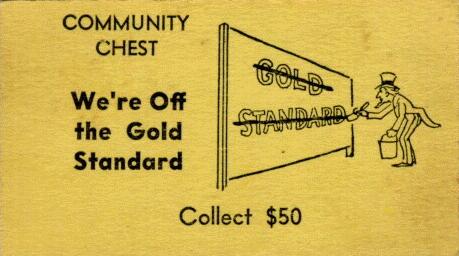
And hey, you litigious folks who won’t take responsibility for yourselves, who think the world owes you something because you woke up this morning…! Sorry, the world doesn’t owe you shit either. Just because it used to be easier for the big corporations to get away with publicly doing bad stuff and hence had to invent EULAs to protect their asses doesn’t mean that we’re off the gold standard. …You get taken advantage of, get disappointed, lose a limb because of your own actions, because of choices you made (or keep making!). If we’re going dump the producer’s ability to disclaim all responsibility for the things they put out into the wild then we as the receivers of their output must make up the difference with self-reliance and self-policing and taking care of ourselves. Hey hey, no one else is going to do it. Even if that chainsaw manufacturer did screw up, you’re still down 50% in appendages are you not? So yeah, don’t lop off your arm in the first place, they include the manuals for a reason!
Whatever whatever, point being, disclaiming responsibility is insulting, it’s cold and it’s not inline with what our parents taught us. Yeah, that vazz? I broke it. Twice!
So here’s a proposal (I’m full of ’em). Just like how there’s fair use in copyright, there ought be reasonable use in products so that I can put out a piece of software or hardware or some inflamatory idea and be generally protected against the possible ineptitude of eventual receivers. At the same time, as a receiver of other people’s output myself, I need those producers to first feel pride and ownership of their work and a commitment to me as a person to vouch for their work; and hey, if they eff up big time, to be culpable for any malicious or otherwise avoidable offenses that they commit. That’s just fair, right?
Banning EULAs as meaningless and unenforceable is one way to raise this issue. Is it a pratical, realistic solution? Who knows! But now you’re thinking about it, right?
I Represent Me
Executive summary: In considering Boris Mann’s recent presentation on “Personal Brand Development”, I suggest that individuals represent themselves first as people and second as employees, if at all. Furthermore, that corporations are increasingly only a figment of law that will eventually become less relevant as individuals decide to work on loosely joined, distributed, collaborative projects. Give it 20 years, you’ll see.
 Conversations swirling lately, mostly about not-a-whole-lot, but then there are kernels of wisdom, little things that prove that the earth is moving underneath you, that the ants haven’t stopped marching, that invisible forces continue to act unabated.
Boris presented on something called “Personal Brand Development”, giving credit to Jame and Kris for sourcing the meme.
While I shudder at the sound of the phrase, the concept is worth investigating, mostly because, as with most things of import, I had similar serendipitous conversations lately about the same concept, not suprisingly with a subtly different thrust. Let me lay out a few quotes to set up my thoughts on this:
A respected, well-known employee is a credit to their employer, just as working for a high-profile company reflects well on the employee. Forward thinking companies should encourage and reward personal brand development.
Web 2.0 and Personal Brand Development Presentation | Bryght
and
Neville Hobson, Tom Foremski and Mitch Ratcliffe are dispensing advice you should run, not walk, to heed immediately if you work in an organization.
The message: Guard your identity and don’t mix it up with your company’s identity. Otherwise, you risk being “disappeared” if you leave your job or get fired.
Allan Jenkins’ Desirable Roasted Coffee
So now here’s where I diverge.
After the Mena vs Ben deathmatch at Les Blogs (an historic moment for civility online), Ben received some interesting feedback from someone who worked for a rather large software company (no, not Macrosoft, the other one). We’ll call him Mr Cog (I won’t name names since I honestly forget who it was that talked to him). Paraphrased, Mr Cog’s point was this: You’d better shuddup because what you say and how you behave represents your employer.
Since Ben does work for a rather large media organization in the UK, this was rather disheartening to hear. Out of a fear that his words might insult someone who would attribute it to his employer and consequently risk his livelihood, he should go mum? What an awful way to ruin a person, let alone an employee!
Sure, it’s not unprecedented for employees to get fired over their after-hours activities. Given that, Mr Cog has a case. Just maybe he was looking out for Ben’s well being. Conventionally, what each of us does, in some small measure, reflects on our employers. Yeah, duh? Ok ok, but given serious reflection, one begins to realize how disempowering and debilitating this attitude — and the resultant fear — really is.
So you want my take? No, probably not. But I’ll tell you anyway. Here’s the punchline: I don’t represent my employer, who I choose to work for represents me.
Catch that?
Ok, let me explain, because it sure sounds more dangerously egocentric than it needs to: I represent me. I represent me in the work I do, in the thoughts I write down and publish, in the conversations I have with other people, in the mistakes I make, in the Flickr photos I post. Though I’m commonly referred to as “a Flock guy”, that’s only relevant because it’s one of the projects that I choose to spend my time on (and yes, they also happen to pay my rent).
But because I choose to work on Flock, how good it is represents me since it’s my work and my intelligence (or lack thereof) that show through in the final result. And so fundamentally I’m responsible for how good or how bad it is, now and over time.
This statement is true for each one of us who works at Flock. There are no weak links. If Flock does indeed suck, it’s up to the individuals who are collectively represented by this group project to collaboratively remedy it (ideally with the support of our community). We each have providence over our own work to a fundamental level: working in open source guarentees a paper trail in the commit log. And so what we each put in is documented, recorded, added to the collective, public record.
So let’s get down to it. Whatever you want to call it (I’ll pass on “Personal Brand Development” thank you very much — I’m a person and don’t need to be branded, but to each their own), the old command and conquer hierarchy is changing and dissolving. The playing field is not just being pulverized, it’s being opened up to the fans to come and participate, much to the dismay of the coaches and referrees. In a worldwide Cluetrainian orgy, it’s now the employees who speak first for themselves and second for their employer. Even better, first for themselves, second for their friends and social network, third for their employers.
Here it is: I have a voice (have always had a voice, figuring it out how to really use it recently) that I should never be afraid to exert. I speak for me and I’m the only one that I can rely on to speak for me and to authentically represent me. My employer understands that my silence would reflect more seriously upon them and the culture they’re creating than anything I might eventually say. Yes, it’s a big messy and wonderful catastrophe, but in the words of dotBen, That’s life.
WordPress 2.0 is out; new site for dot org
Man, the hits keeping on coming for Teh Mully. Launches WordPress 2.0 (changes, download), and new WordPress.org and is the most interesting person in the blogosphere (according to the Blog Herald) of 2005.
The Dons are proud, Matty. Very proud.
Open Source Fashion Statement #1: Wear a Flak Jacket
 David Parmet offers excellent advice for folks looking to do the public releas early and often thing (yeah, like we did):
The whole release early, release often mentality is good in theory. When practiced against an impatient audience, it can quickly squash whatever goodwill and coolness factor a start-up can generate. And the process will only feed itself as more start-ups do alpha releases (if alpha is the new beta, what’s the new alpha) and invite-onlyl pre-alpha pre-releases in response to a blogosphere hungry for the Next Cool Thing(tm).
So what’s the solution? Managing expectations can only take you so far. So release early and put on your flack jacket.
Don’t believe the hype at Marketing Begins At Home
technorati tags: opensource, flock, release early
Revving a classic cliché

So there’s been some more talk lately about Flock and extensions and relevancy and Performancing’s new blogging tool for Firefox. I’m all for it. The more we talk about open source, about Firefox, about Flock, about coming up with better, cooler, faster and more usable technology, the more we’re inclined to just go build it. And in doing so, make sure that it’s relevant and actually meets the needs of real people.
I have to admit though, the potshots at Flock are becoming a little … tiresome.
So ok, I’m all about being skeptical. I’m all about looking a gift horse in the mouth, in its eyes, and … elsewhere… yah. (Y’know, you gotta make sure there’s no sneaky Greeks lurking about or whatever.)
And this post was going to about that old information autobahn thing and how there’s plenty of room for one more automobile manufacturer. And that was going to be my analogy for why Flock is a good thing for drivers, etc, etc. But I decided that’s a dumb idea. And boring to write. So let me get right down to it.
Here’s the thing. We’ve actually been pretty certain for some time that most of the features that we build into Flock will be eventually be ported back over to Firefox as extensions. Or become commodity features in other browsers. That’s the way open source should work — and the way software development plays off itself — and we’re totally in support of that! The point is not to make a bunch of proprietary tools that only work in Flock. That would be rediculous and counterproductive. I mean, our goal is to make using all the great tools now available on the web easier to use by building a more consistent user experience. Yeah, that’s our big top secret plan.
So why build our own browser if we’re in support of this whole extension model anyway? Well, let me paint a picture of my vision for Flock and why it at all makes sense that we continue doing what we’re doing, no matter how many extensions come out and attempt to mirror our featureset.
Cue lights … cameras rolling… pull curtains … 5, 4, 3…
So in the olden days, there was a web of interconnected computers and file servers and yada yada that were conceived of as a massive network of libraries containing all kinds of hyperlinked data and information. Now, pieces of that data had individual addresses, just like books in libraries had unique identifiers called Dewey decimal numbers. Thus pieces had a static position in the system and you used a web browser to pull up those pieces of data. So when someone added a piece of information to the network, say an online shrine about their cat, it got its own address, acronymically known as a URL.
So so so, jump forward in time a bit. Welcome to today, a time of spheres… blaw-go…spheres… where currency is measured by one’s attention-magnetism and linkification, where if you don’t have a blog, you don’t have a pulse and you’re dead, kaput, worse than history, see ya later, sayonara, did you even exist in the first place? Oh yeah and what’s your feed again?
Hmm. So let’s slow it down a second here. Get this, here it comes, I’ve got a visual metaphor to sink yourself into: so say you’re walking down the street, a crowded street. Let’s put you in Manhattan, or Boston, DC, Copenhagen, Tokyo wherever. Look, it’s busy. 10,000 people trampling the sidewalk concrete and they’re all in chaos, no no, wait, calm, but y’know, this is chaos theory in motion.
This is 100,000 people walking down the concrete towards you, you, you’re walking the other way — who knows why? you just are — and there are these crescendoing voices around you, swirling, smashing conversations. You’re grasping at words, sounds; the ring of cell phones, change being dropped between high heels and rubber soles. A cacophonic masterpiece of human communication.
So listen, you hear something, it piques your interest, you think to yourself, “Aha.”
Moving towards it, crowd parting in front of you, shoulders meeting; you sideways, all arms and elbows, towards the sound. One motion, you blur, find the source. Listen, speak, are heard, enlightenment and voice. This is conversation. This is fleeting. This is connection and this is what sustains you.
Now there are ten of you. Ten. Or maybe ten hundred. And each one of you is having this experience. As you weave your way in and out of the throng, you’re merging and joining ongoing; nascent; 1,000-year-old conversations. Say your piece, move on. Don’t stay too long, surely something else as interesting is being said … just around the corner.
Ok.
Stop.
Curtain down, lights go on; watch your eyes, it’s bright.
Now that, that picture, that experience, that’s the web. Yeh, that’s the web today except imagine it with your eyes closed, with blinders on, with the sound fuzzed out and staticy, with orange icons all over the friggin’ place. And yes, every now and then some jack-in-the-box assclown pops up trying to sell you V_1agra.
It almosts make me want to go back to the old library model.
But no, see, that’s where Flock comes in. Or I don’t care, don’t call it Flock. Whatever you want, but that’s where the thing we’re building comes in. That’s why we exist, that’s why we matter, that’s what the point is.
Yeah, Firefox and Duct tape, it’ll help. Sure sure. It’ll get you some of the way there. But hell, when I’m talking to someone, engaged in a conversation that threatens my very existence, or that threatens to change the way I flip my omelettes, man, I do not want my mouth to fall off at the jaw because it wasn’t tested, wasn’t built right, didn’t have a million beady eyes boring down on it while it was being fastened to my head, making sure the stupid thing would function in the real world without needing pliers or a tire-iron to get it to work right. No, I do not want my memory to hiccup, to recede, for me to lose my place in line, to have my line of thinking severed when I’m talking to someone else. I need to be there, fully, to be there in the conversation, as a whole, as one integrated thing, yes yes, a fully functioning machine. No, I don’t want to be some bootstrapped, schizophrenic, unintuitive, semi-confused and incomplete afterthought kludged together and mistaken for a vision of the real thing. No, I want more than that, I want to be as in the conversations that I have online as the ones I have offline — I want to get to the point where there is no difference, that a conversation is a conversation is a conversation. It’s sharing understanding and it’s sharing confusion. I need a tool that helps me achieve that. It needs to understand things the way I understand them; it needs to reflect the reality of what’s going on online today.
When was the last time you thought twice about the fact that you’re talking to a digital signal every time you use your cell phone?
Or how about the fact that your instant messages (which indeed seem so instant) actually travel over thousands of other people’s computers and servers before they reach you?
And your email? Even worse. If you think herding cows is messy, you should see the way email is schlopped all over the place.
The point is this. These technologies have become second nature vehicles for communication and expression. And blogging, podcasting, vlogging and the whole lot of recent “mecasting” technologies aren’t as integrated, aren’t as easy, aren’t as accessible as they need to be for them to be picked up and made as commonplace as the telephone (or cellphone, if you prefer). Point Four Percent of the population is nothing (that’s 23.6 million blogs as a percentage of the world population by the way). And yet another extension is not the answer. I don’t even know if another browser is. But we need something that works to solve this problem… or at least to make it better.
Yep, we’ve got a vision for how a browser with a different understanding of the web can help. We wouldn’t be building it otherwise. This is what drives us to make Flock the best possible, most easy-to-use and most useful tool it can be, because we’re experiencing all the same problems that everyone else is. Just coz us at Flock’re a tech savvy bunch doesn’t mean this stuff comes easy for us either. And for chrissake, it’s got to get easier, so much easier, if these conversations are going to include and be accessible to those who most need a voice.
Bounty County: Coding bounties for free and open source projects
Need something done for your free or open source project? Now you’ve got a place to put up a bounty for it.
Announcements galore from PMatty
 Big week for my good buddy Matty Mullenweg:
- Automattic, Matt’s WordPress startup, has launched
- New stats system for WordPress.com is coming
- Yahoo will be bundling WordPress with Yahoo Hosting
- WordPress 2.0 Release Candidate available
technorati tags: wordpress, automattic, yahoo
Scott Kveton is My Hero
 And I’m not kidding either. This guy is solid. He’s a gentleman scholar and an open source kick-ass-takin’-names do gooder mofo with an impeccable track record. And he’s so friggin’ on the ball… and yeah, nice.
I first encountered Scott when I was at Spread Firefox and he’s proven to be one of my best allies in my work to promote open source ever since. We’ve met up at a couple conferences and have built up a fantastic rapport in the short year and half that we’ve known each other. And so it just tickles me orange to see him profiled in InformationWeek’s Innovators & Influences: Change Agents for his work at OSUOSL in securing $350,000 from the search engine of search engines for the continued advancement and development of open source initiatives like Mozilla, Gnome, Gentoo, Debian and others.
The best thing about Scott? He shares my vision for the future of open source and where it’s going — in fact, our conversations have formed a great deal of my thinking about and approach towards our mutual goals. But then Scott’s got a headstart on me, having already delivered all kinds of results. Sigh.
Let me put it this way. He’s kind of like the Babe Ruth of open source. He’s taken aim straight at center field of the status quo and I have absolutely no doubt in my mind that he’s not going to absolutely smash every opportunity that comes down the pipe on his way to advancing the open source movement onward and everforward.
Congrats, Scott. And to think, we’re just gettin’ warmed up.
 Factory Joe