…And a beautiful example of one such tumblelog: project.ioni.st. Kind of like Asides, but lahge and in chahge!
Under the Radar Interview
Irina interviewed me for Under the Radar. A bit off the cuff, but the story is starting to come together. Er, I think it is, anyway.
…Wanted to destroy something beautiful

You have to understand something about Flock. Nothing is permanant. We’re hungry. Destruction is a form of expression. It’s a form of existing, of creating, of saying, we exist.
So if we have to, we will destroy Flock. Not in the way you think. Not in that stupid, insipid, “yes it ends here way”. No. In that, “nothing worth doing happens the first time around.”
We will destroy it because the ideas are weak, the promise less than what we desire, less than what we are capable of. We will kill it because it needs to be killed. Because evolution is inevitable.
We’re hungry. What this country gives us doesn’t feed our need to create, to produce, to solve and to connect. With all due respect, fuck you, we will create in the same action that destroys. We don’t believe in what we’re given; there is something better.
Damn you, I’m not kidding.
K2 Beta for WordPress 2.0 is out
Michael Heilemann and Chris J Davis keep on truckin’ on K2, the theme that powers this site, releasing K2 Beta One which now requires WordPress 2.0. Time to upgrade!
A Eulogy for the EULA

Walking home tonight something occurred to me that is strangely disarming and significant, primarily in its simplicity and “oh yeah…” quotient.
I’m no lawyer, but I’d be damned if any software EULA would actually hold up in court anymore. Any EULA for that matter. I mean, think about it. If you install any amount of software, every time you open up a DMG or run an install.exe, you will inevitably click through some lengthy piece of legalese that invariably concludes with you pressing a button that reads “I agree”.
And we all know how blissfully ignorant you are of whatever it is you just agreed to.
Or how about that shrinkwrap EULA? Now there’s a classic.
I mean, look at the Sony Root Kit fiasco. No doubt somewhere on the packaging or some embedded app that launched on CD insertion warned you: “Hey read this, coz we’re telling you explicitly that we’re taking over your system and spying on you. If you agree to these terms by [clicking a button | inserting this CD], hey, well, don’t say later that we didn’t warn you. We disclaim all liability.
“And we’ve got lawyers.
“Lots of ’em.
“And they write this shit all day long. So don’t even think of questioning whether this is legit or not. We say it is. So of course, it is.”
So anyway, this thing, it sprung on me: Holy crap, EULAs are totally against humanity! Yeah, I mean, I have like a million ideas a second so it’s not like I went looking for yet another salvo for my new war against intellectual property, copyright and anti-human laws — no, this idea just came to me clear out of the evening sky (or the three doses of caffeine I consumed today… damnit).
Alright alright, back to this realization. So I want to do something that will have absolutely no effect on anything, but at least shares the warmth of the flame burnin’ under my kettle. I want to call for a moratorium on EULAs. Yeah, you heard me. Uh huh, that’s right. It’s time we pulled the plug on irresponsiblity-perpetuators. It’s about time that I was able to use a tool, play with a toy, implement an idea without the originator of said thing having to shove off all ownership or responsibility for their contribution to the world for fear that I’ll turn around and sue them over something absurd, like becoming depressed because my car is the wrong shade of lemon-chiffon. Or something else. Whatever.
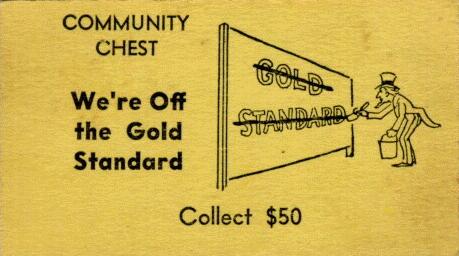
And hey, you litigious folks who won’t take responsibility for yourselves, who think the world owes you something because you woke up this morning…! Sorry, the world doesn’t owe you shit either. Just because it used to be easier for the big corporations to get away with publicly doing bad stuff and hence had to invent EULAs to protect their asses doesn’t mean that we’re off the gold standard. …You get taken advantage of, get disappointed, lose a limb because of your own actions, because of choices you made (or keep making!). If we’re going dump the producer’s ability to disclaim all responsibility for the things they put out into the wild then we as the receivers of their output must make up the difference with self-reliance and self-policing and taking care of ourselves. Hey hey, no one else is going to do it. Even if that chainsaw manufacturer did screw up, you’re still down 50% in appendages are you not? So yeah, don’t lop off your arm in the first place, they include the manuals for a reason!
Whatever whatever, point being, disclaiming responsibility is insulting, it’s cold and it’s not inline with what our parents taught us. Yeah, that vazz? I broke it. Twice!
So here’s a proposal (I’m full of ’em). Just like how there’s fair use in copyright, there ought be reasonable use in products so that I can put out a piece of software or hardware or some inflamatory idea and be generally protected against the possible ineptitude of eventual receivers. At the same time, as a receiver of other people’s output myself, I need those producers to first feel pride and ownership of their work and a commitment to me as a person to vouch for their work; and hey, if they eff up big time, to be culpable for any malicious or otherwise avoidable offenses that they commit. That’s just fair, right?
Banning EULAs as meaningless and unenforceable is one way to raise this issue. Is it a pratical, realistic solution? Who knows! But now you’re thinking about it, right?
I Represent Me
Executive summary: In considering Boris Mann’s recent presentation on “Personal Brand Development”, I suggest that individuals represent themselves first as people and second as employees, if at all. Furthermore, that corporations are increasingly only a figment of law that will eventually become less relevant as individuals decide to work on loosely joined, distributed, collaborative projects. Give it 20 years, you’ll see.
 Conversations swirling lately, mostly about not-a-whole-lot, but then there are kernels of wisdom, little things that prove that the earth is moving underneath you, that the ants haven’t stopped marching, that invisible forces continue to act unabated.
Boris presented on something called “Personal Brand Development”, giving credit to Jame and Kris for sourcing the meme.
While I shudder at the sound of the phrase, the concept is worth investigating, mostly because, as with most things of import, I had similar serendipitous conversations lately about the same concept, not suprisingly with a subtly different thrust. Let me lay out a few quotes to set up my thoughts on this:
A respected, well-known employee is a credit to their employer, just as working for a high-profile company reflects well on the employee. Forward thinking companies should encourage and reward personal brand development.
Web 2.0 and Personal Brand Development Presentation | Bryght
and
Neville Hobson, Tom Foremski and Mitch Ratcliffe are dispensing advice you should run, not walk, to heed immediately if you work in an organization.
The message: Guard your identity and don’t mix it up with your company’s identity. Otherwise, you risk being “disappeared” if you leave your job or get fired.
Allan Jenkins’ Desirable Roasted Coffee
So now here’s where I diverge.
After the Mena vs Ben deathmatch at Les Blogs (an historic moment for civility online), Ben received some interesting feedback from someone who worked for a rather large software company (no, not Macrosoft, the other one). We’ll call him Mr Cog (I won’t name names since I honestly forget who it was that talked to him). Paraphrased, Mr Cog’s point was this: You’d better shuddup because what you say and how you behave represents your employer.
Since Ben does work for a rather large media organization in the UK, this was rather disheartening to hear. Out of a fear that his words might insult someone who would attribute it to his employer and consequently risk his livelihood, he should go mum? What an awful way to ruin a person, let alone an employee!
Sure, it’s not unprecedented for employees to get fired over their after-hours activities. Given that, Mr Cog has a case. Just maybe he was looking out for Ben’s well being. Conventionally, what each of us does, in some small measure, reflects on our employers. Yeah, duh? Ok ok, but given serious reflection, one begins to realize how disempowering and debilitating this attitude — and the resultant fear — really is.
So you want my take? No, probably not. But I’ll tell you anyway. Here’s the punchline: I don’t represent my employer, who I choose to work for represents me.
Catch that?
Ok, let me explain, because it sure sounds more dangerously egocentric than it needs to: I represent me. I represent me in the work I do, in the thoughts I write down and publish, in the conversations I have with other people, in the mistakes I make, in the Flickr photos I post. Though I’m commonly referred to as “a Flock guy”, that’s only relevant because it’s one of the projects that I choose to spend my time on (and yes, they also happen to pay my rent).
But because I choose to work on Flock, how good it is represents me since it’s my work and my intelligence (or lack thereof) that show through in the final result. And so fundamentally I’m responsible for how good or how bad it is, now and over time.
This statement is true for each one of us who works at Flock. There are no weak links. If Flock does indeed suck, it’s up to the individuals who are collectively represented by this group project to collaboratively remedy it (ideally with the support of our community). We each have providence over our own work to a fundamental level: working in open source guarentees a paper trail in the commit log. And so what we each put in is documented, recorded, added to the collective, public record.
So let’s get down to it. Whatever you want to call it (I’ll pass on “Personal Brand Development” thank you very much — I’m a person and don’t need to be branded, but to each their own), the old command and conquer hierarchy is changing and dissolving. The playing field is not just being pulverized, it’s being opened up to the fans to come and participate, much to the dismay of the coaches and referrees. In a worldwide Cluetrainian orgy, it’s now the employees who speak first for themselves and second for their employer. Even better, first for themselves, second for their friends and social network, third for their employers.
Here it is: I have a voice (have always had a voice, figuring it out how to really use it recently) that I should never be afraid to exert. I speak for me and I’m the only one that I can rely on to speak for me and to authentically represent me. My employer understands that my silence would reflect more seriously upon them and the culture they’re creating than anything I might eventually say. Yes, it’s a big messy and wonderful catastrophe, but in the words of dotBen, That’s life.
EFF the RIAA
 Talked to my buddy Jason Schultz from the EFF about what they’re doing about the RIAA and MPAA. He came back with a bunch of useful links:
Action items
Supporting materials
- File Sharing: Music to our ears
- RIAA v. The People
- A Better Way Forward: Voluntary Collective Licensing of Music File Sharing
- Sony BMG Litigation Info (rootkit case)
- EFF DRM Blog
And if you’re looking for a decent source of non-DRM MP3s, AllofMP3 looks fairly promising, operating in accordance with license # LS-3M-05-03 of the Russian Multimedia and Internet Society. No, globalization isn’t all bad!
CocoaRadio interview posted
 I’ve got another interview out in the wild, this time at Blake Burris’ CocoaRadio.
The interview was conducted at my favorite San Francisco cafe, Ritual Roasters, so there’s a bit of a din in the background. It also took place over a month ago, which makes some of the information obsolete (I wrote about cloning APIs here). On the other hand, I do talk fairly expansively about the vision for Flock… how microformats will help, what it’s like developing a cross-platform Mozilla app and where we’re in general going with Flock.
I think it’s probably the best real-world articulation of what Flock’s all about so far, so if Flock still doesn’t make much coherent sense to you, definitely take a listen and let me know what you think.
WordPress 2.0 is out; new site for dot org
Man, the hits keeping on coming for Teh Mully. Launches WordPress 2.0 (changes, download), and new WordPress.org and is the most interesting person in the blogosphere (according to the Blog Herald) of 2005.
The Dons are proud, Matty. Very proud.
Intellectual Property Perpetuates the Intellectual Police State

First you flood the P2P networks then you try to buy them out. You arrest, spy on and insult your own customers and are creating a hostile environment for creative expression.
You want a war? Fine.
You’ve got everything to lose. The artists are against you. Musicians are against you. The people who listen to music are against you. And most importantly, the kids are against you.
You want a war? Bring it on.
 Factory Joe